Statement
Photography:
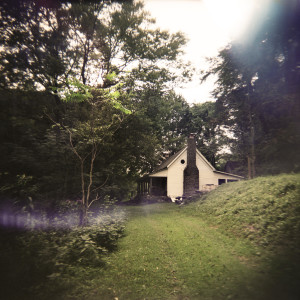
As I get older, I realize that my earliest memories are no longer my own. They are places and moments that were portrayed from someone else’s point of view; the person behind a the camera. My grandparents were professional photographers, so growing up there was always someone documenting my life. Viewing these family photographs over and over has rewritten my own memories with new fabricated versions. When I think back to childhood moments, I realize I can even remember what I looked like at the time and how tall I was (something only understood through the adult photographer’s perspective and view).
My interest in photography comes from the juxtaposition between the documentary aspects of capturing the “decisive moment” and the fact that the depiction will always have remnants of the creator’s perspective. I often like to play with these notions by utilizing vintage cameras that provide more opportunity for physical manipulation of the image making process. It’s easy to create a false sense of nostalgia that speaks to a time predating when the image was actually created.
My digital images are inspired by the early “street photography” of Henri Cartier-Bresson. I’m interested in capturing split seconds of the world around me that may otherwise be overlooked. I enjoy how attempting to do this makes me simultaneously withdraw from and engage in my surroundings. If I don’t take the time to do this, I fear one day I’ll have to rely on someone else’s interpretations and once again I’ll end up with fabricated memories. I’d much rather be the one shaping other people’s understanding of the world.